
The Role of Dry Stone Walls in Supporting Biodiverse Habitats
The Wildlife of a Dry Stone Wall
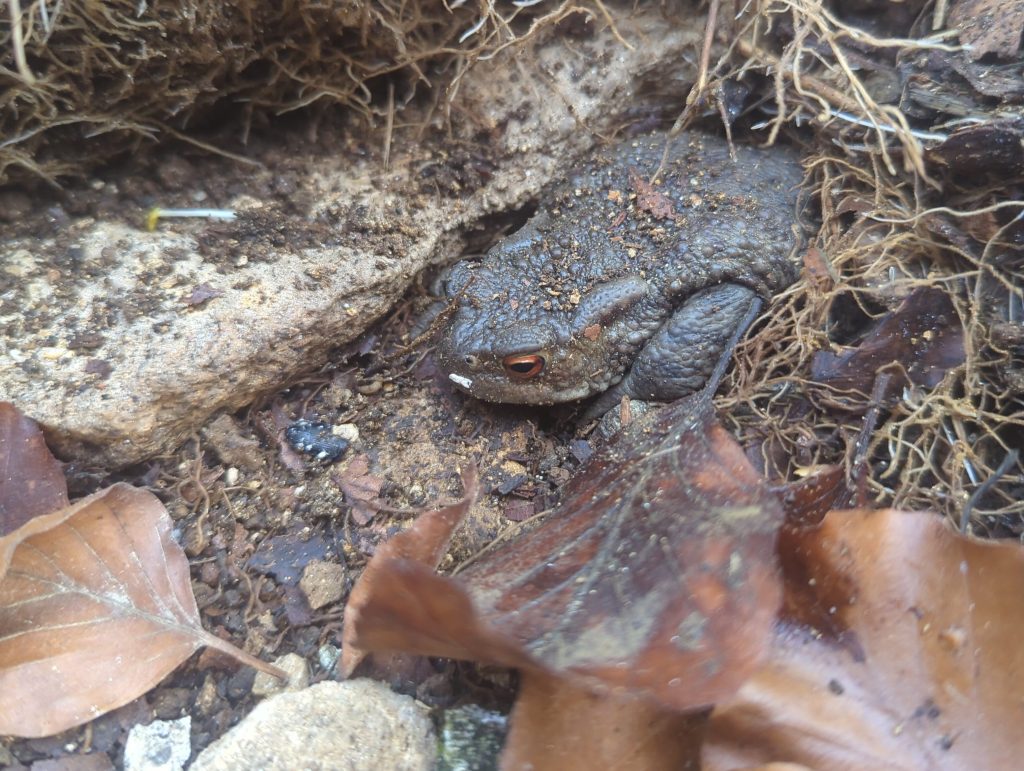
When we’re in a field or garden, building or repairing a dry stone wall, we’ll often find a hibernating toad, a masonry bee basking in the sun or a muslin footman moth larvae feeding on lichen. These friendly encounters are always an exciting part of the job, but, more importantly, they are a reminder that the wall we are working on is not only a wall, but also a rich and biodiverse habitat.
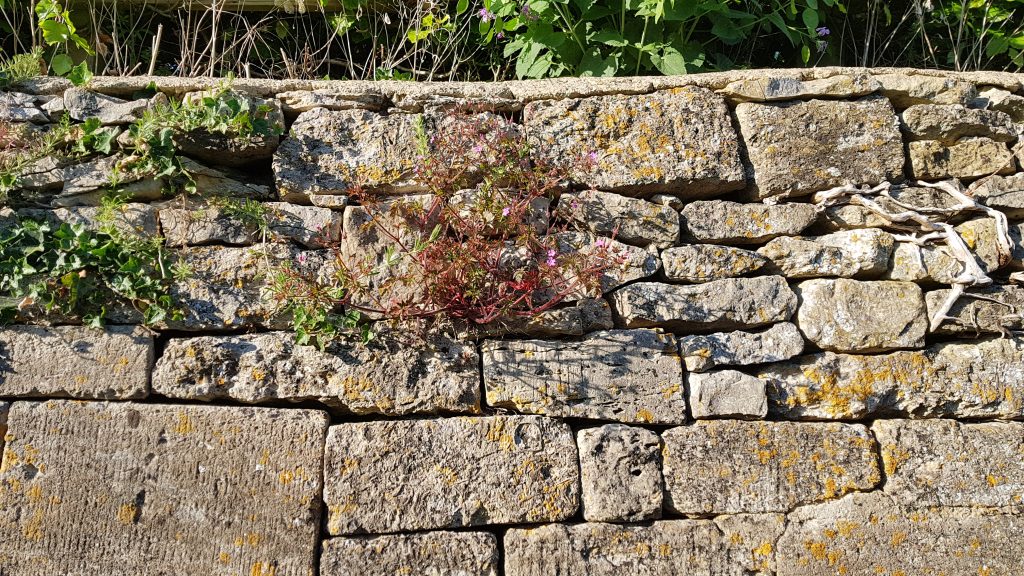
Just like a natural rocky outcrop, such as a cliff face or escarpment, a dry stone wall is host to a whole variety of plant and wildlife, whether as a permanent home or temporary resting place. The first to colonise a wall are the lichens and mosses. Over time they break off small fragments of stone, which combine with dead material and particles to make a simple soil. This allows more plants to grow, as well as fungi. Birds, insects, amphibians and small mammals also make use of dry stone walls. This includes songbirds, spiders, snakes, slow worms, toads, voles, mice, stoats, weasels and rabbits. Some use the gaps and crevices in a wall as shelter, including for nesting and feeding. Others make use of the coping stones to provide viewpoints for resting and hunting. Walls also function as wildlife corridors, connecting and allowing passage for insects and animals between other habitats.
Factors Impacting the Ecology of a Dry Stone Wall
The location of a wall will impact the kind of wildlife it will attract. Its geographical location in the UK will dictate the kind of stone it is made from and different types of stone will encourage different species of plantlife. In the Cotswolds, for example, our alkaline limestone supports a specific range of plants, mosses and lichens as opposed to a wall built from more acidic stone like granite or slate. The altitude and climate of the area in which a wall is located, as well as its orientation will also influence its ecology. Different parts of the same wall might even function as micro-habitats, for example, if one side faces north and the other south this can lead to drastically different habitats on either side of the wall. As you might imagine, within a dry stone wall there will be some dryer sections providing well needed shelter but there will also be localised drip points offering damper conditions for those that need it. The build and condition of a wall is also a significant factor in habitat diversity, which we have written about in much more detail here.
Dry Stone Walls can Contribute Towards Rewilding, Conservation and Habitat Regeneration
However, despite their important ecological function, dry stone walls are rarely built with nature in mind. Their primary purpose is usually a more human, utilitarian one – to define boundaries between fields, property and gardens – with the environmental benefit merely a happy by-product of this. At Dry Stone Habitats, our aim is to combine the traditional craft of dry stone walling with a purposeful ecological approach to create walls that intentionally and directly benefit Britain’s wildlife, supporting rewilding, environmental regeneration and conservation.
If you are interested in reading more about the ecology of dry stone walls, click here to read more of our blog posts on the topic.
Key References and Further Reading:
- S. Adcock (2024). A comprehensive guide for spotting wildlife in dry stone walling across the UK (https://www.tcv.org.uk/media_hub/a-comprehensive-guide-for-spotting-wildlife-in-dry-stone-walling-across-the-uk/. Date Accessed: 15/06/2026)
- A. Brooks and S. Adcock (1999). Dry Stone Walling: a practical handbook (Doncaster: BTCV)
- A. Darlington (1981). Ecology of Walls (London: Heinemann Educational Books)
- J. Presland (2007). Conserving the Flora of Limestone Dry Stone Walls (Sailsbury: Wiltshire Natural History Publications)